News
IUCN US Fund CEO Tracy Farrell Delivers Plenary at 2026 California 30×30 Summit

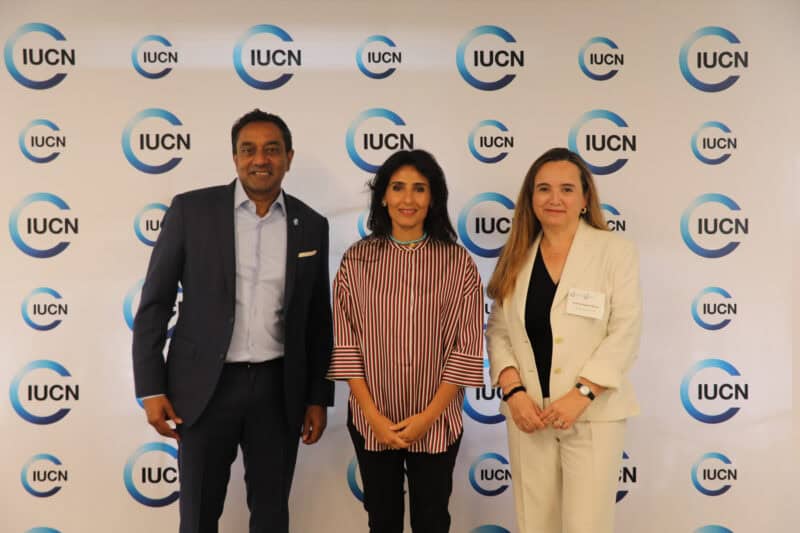
San Francisco, CA — On September 29, Dr. Tracy Farrell, IUCN US Fund CEO and IUCN North America Regional Director, , took the stage at the California Academy of Sciences to deliver a keynote address at the 2026 30×30 Partnership Summit, bringing a global perspective to the leaders driving forward California’s nature conservation efforts.
Why IUCN Was in the Room
California is one of the first two U.S. subnational governments — alongside the Commonwealth of Massachusetts — to hold membership in IUCN, the International Union for Conservation of Nature. IUCN is the world’s largest and most diverse environmental network, uniting governments, agencies, and civil society around shared solutions for nature and climate.
For California, that membership is more than symbolic. It’s a direct line into a global community of practice — a way for the state to bring its own conservation playbook to the world stage, while also learning from governments and institutions tackling similar challenges everywhere from Costa Rica to Kenya.
California’s 30×30 Progress
California’s 30×30 initiative, launched by Governor Gavin Newsom in 2020, set an ambitious target: conserve 30% of the state’s lands and coastal waters by 2030. According to the most recent progress report, California has conserved 25.5% of its land and 16.2% of its coastal waters, with steady gains added each year through new conservation easements, land acquisitions, and partnerships across tribes, agencies, and communities statewide.
As a subnational government, the state became an official Observer to the UN Convention on Biological Diversity (CBD) ahead of the 16th Conference of the Parties (COP16), where parties adopted the Kunming-Montreal Global Biodiversity Framework (KMGBF), Target 3 of which calls for the conservation of 30% of land, water and seas by 2030.
California’s measurable progress is signifcant — and a reminder that work remains to close the gap by 2030.
A Landmark Win for Californian Coasts
One achievement stood out at this year’s Summit: in June 2025, California’s Marine Protected Area Network became the first ecological network in the world to be certified on IUCN’s Green List of Protected and Conserved Areas — more than doubling the number of Green List-recognized sites worldwide at the time.
Spanning the state’s entire 1,770-kilometer coastline and protecting 16% of state waters, the California MPA Network comprises 124 individual sites managed under a single, science-based system — the largest network of its kind in North America. The Green List certification recognizes areas that meet the highest global standards for both effective and equitable management, following a rigorous six-year evaluation process.
California commitment to managing its protected areas to the highest global standards — and noting the state’s growing visibility on the international stage, including at recent UN Biodiversity and Climate COPs, where California’s delegations have shared lessons from its 30×30 journey with governments and institutions from around the world.
Farrell: Subnational Leadership Is Global Leadership
In her keynote, Dr. Farrell spoke to why subnational leadership — states, provinces, and cities acting on nature and climate — matters now more than ever. With IUCN membership open not just to national governments but to subnational governments and agencies, states like California and Massachusetts have a unique opportunity: a formal seat at the table in shaping global conservation policy, and a platform to showcase home-grown solutions to an international audience. Farrell emphasized that the work we need to do to achieve achieve globally-agreed targets for area-based conservation needs to happen at all levels. This ambition needs global policies, but also requires subnational and tribal commitment, and local work.
Governor Newsom congratulated the state’s conservation community on the achievement, pointing to the Green List recognition as proof of California’s with cities and communities. By connecting local action to global frameworks like the Kunming-Montreal Global Biodiversity Framework, subnational governments can benchmark their progress against the best conservation science and practice worldwide, while contributing real, on-the-ground solutions back into that global knowledge base.
California is a model of what that engagement can look like in practice — from its MPA network’s Green List certification to its continued investment and partnership-building toward 30×30. As more U.S. states and municipalities consider their own roles in the global nature and climate agenda, California’s example offers a clear blueprint: ambitious goals, transparent progress reporting, and a willingness to connect local work to a much larger global effort.
Learn more about the 30×30 Partnership Summit at californianature.ca.gov.