Events News
IUCN Celebrates Grand Opening of New North America Regional Office in Washington, D.C., Marking 40 Years in the Region
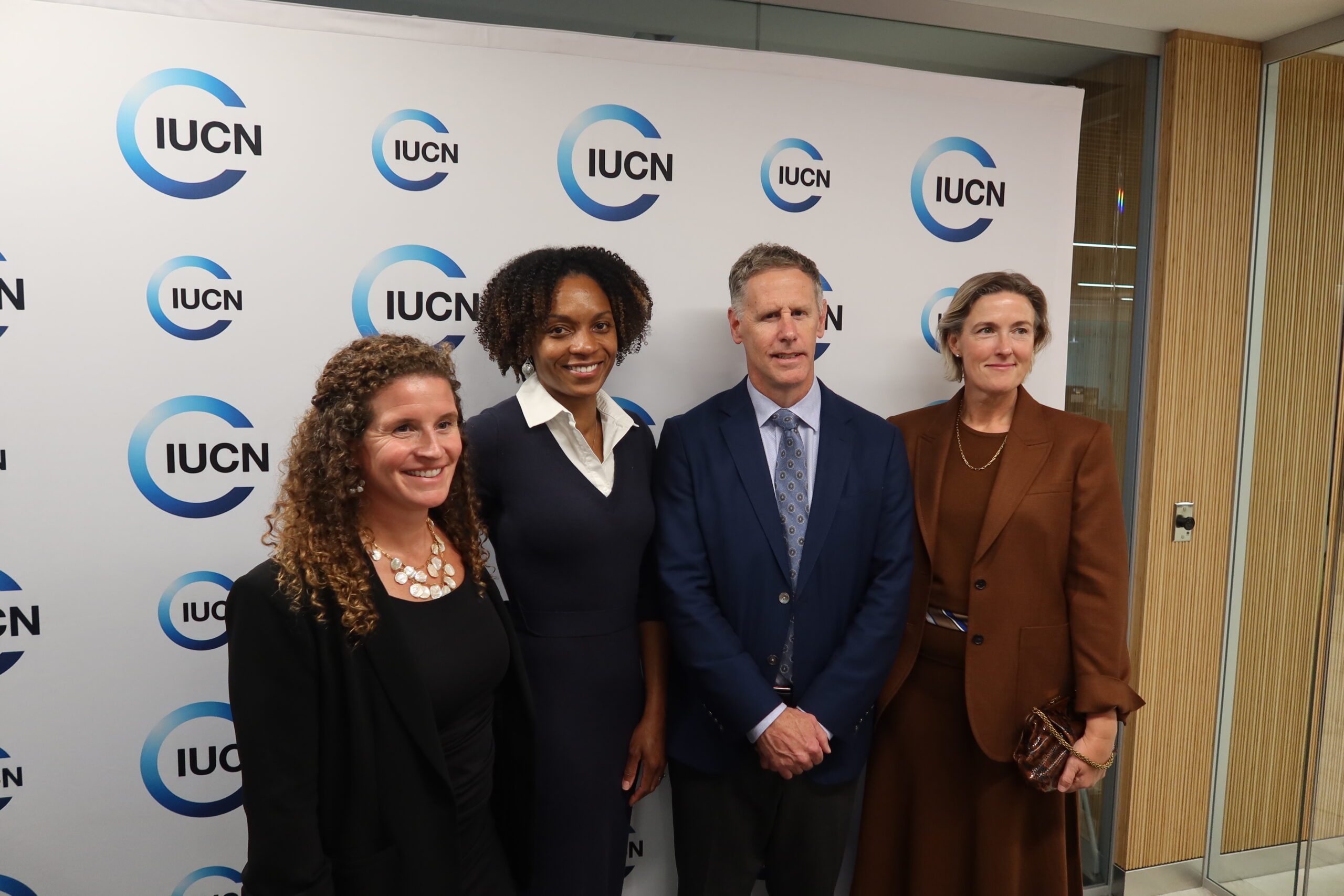
IUCN’s North America Regional Office, with IUCN US Fund, celebrated the opening of its new Washington, D.C. space, welcoming global conservation leaders, philanthropists, Members, diplomats, and policymakers and positioning the Regional Office as a hub for conservation innovation and action.
IUCN North America Regional Director Dr. Tracy Farrell is welcomed to the new office by Alan Feldenkris, Chief Communications and Marketing Officer of the National Audubon Society.
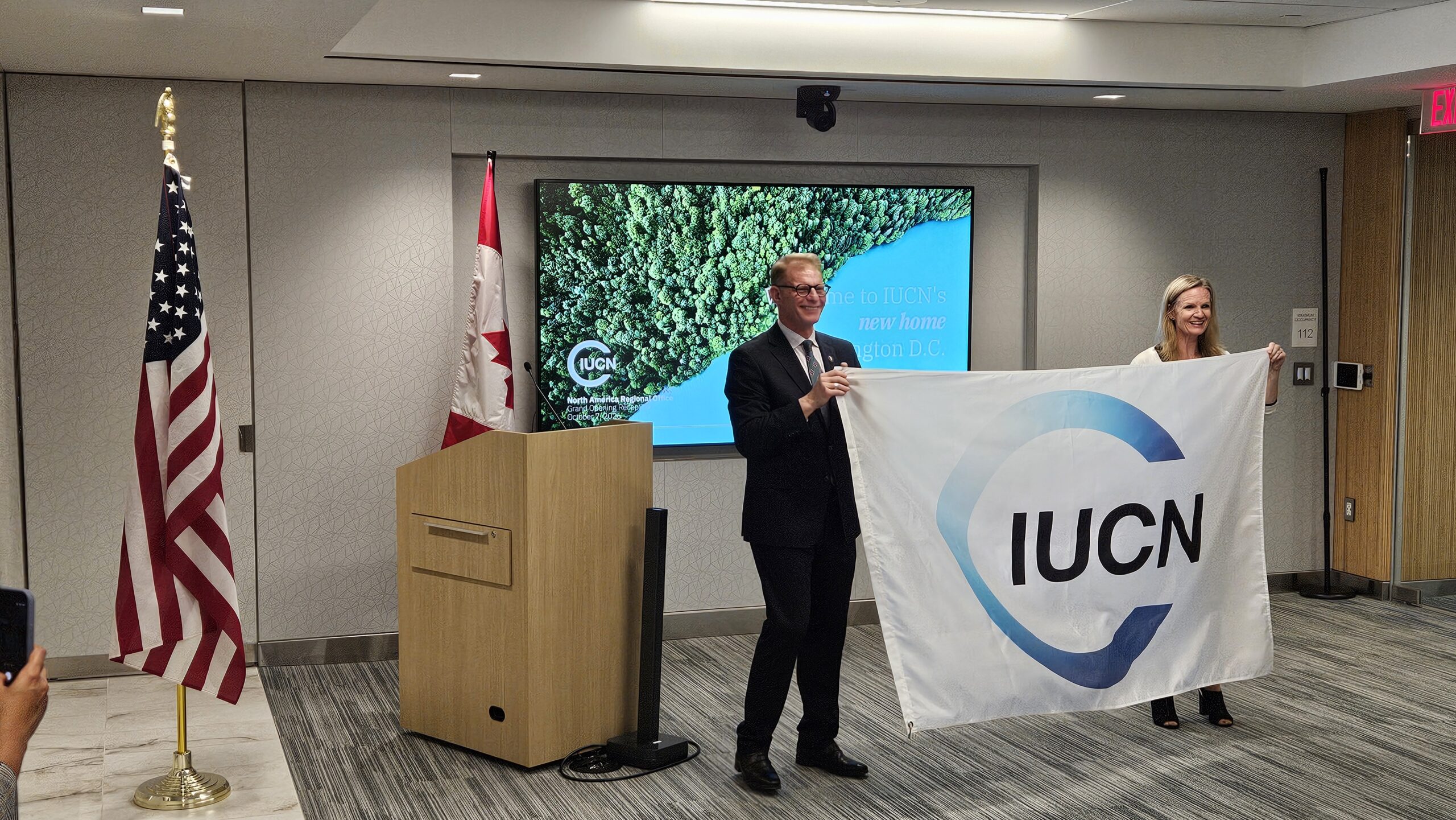
Left to right: Sarah Reiter, Associate Vice President, Ocean Solutions, New England Aquarium; Letise LaFeir, Chief of Conservation and Stewardship, New England Aquarium; Tom O’Shea, Commissioner, Massachusetts Department of Fish and Game; Jennifer Ryan, Assistant Commissioner for Strategic Initiatives and Climate Policy, Massachusetts Department of Fish and Game
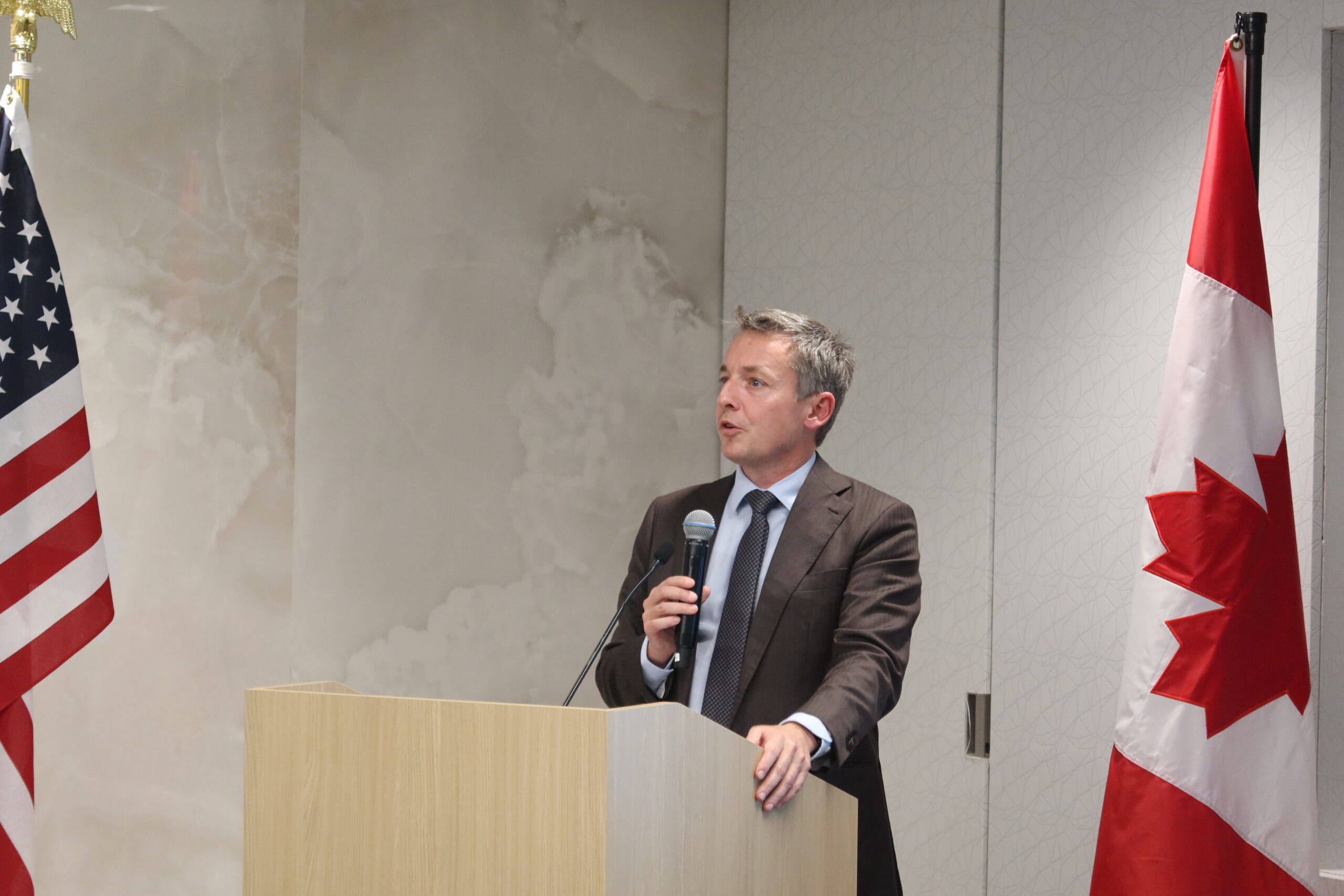
Adrian Hauri, Deputy Chief of Mission at the Embassy of Switzerland discussed Switzerland’s partnership with IUCN – as a State Member, host country and Framework Partner – and the importance of sustained investment in nature and climate. IUCN’s global headquarters is in Gland, Switzerland.
WASHINGTON, D.C. (October 7, 2026) – The International Union for Conservation of Nature (IUCN) celebrated the grand opening of its new North America Regional Office on Wednesday, October 7, with an evening reception at 1828 L Street NW, Washington, D.C. The event marked 40 years of IUCN’s presence in Canada and the United States.
The new office reflects the continued importance of multilateralism and conservation impact, as well as the growth of IUCN’s work in North America across climate, protected areas, forests and grasslands, and human rights. It also gives IUCN a base from which to show how regional efforts advance global policy ambitions, working closely with the many institutions and partners in the region.
“This is a milestone, 40 years in the making. Four decades of partnership across Canada and the United States. Ths new office gives IUCN a permanent home in North America. A place where Members and partners can gather, collaborate, and carry our mission forward”.
IUCN’s President Razan Al Mubarak
The event brought together IUCN Members from across the United States and Canada, along with diplomatic partners, researchers, policymakers, federal partners, multilateral institutions, and philanthropic leaders. It took place the evening before the 2026 Annual Meeting of the IUCN U.S. National Committee.
Program Highlights
The evening opened at 5:00 p.m. with a reception and tours of the new office. Formal remarks began at 5:30 p.m. with a welcome from Regional Director Dr. Tracy Farrell, recorded remarks from IUCN President Razan Al Mubarak, and greetings from IUCN Councillors for the North America region, James Bartram and Katy Gwiazdon.
Regional Director Dr. Tracy Farrell emphasized “IUCN has always been needed, and it always will be. Looking ahead across a twenty-year horizon, our new vision accelerates our commitment to conservation. We are driving transformation in food and agriculture, in mobilizing resources for nature, and in policies that remove perverse incentives and reward strong stewardship.”
Speakers reflected the breadth of the IUCN community:
IUCN Members: Dr. Letise LaFeir, Chief of Conservation and Stewardship at the New England Aquarium, spoke on the role of U.S. Member organizations and collective action for nature.
Private sector: Randall Billy, Director, International Government Sector at Esri, discussed the company’s collaboration with IUCN.
Multilateral finance: Dr. Erwin De Nys, Practice Manager for Environment, Natural Resources and Blue Economy (Latin America and Caribbean) at the World Bank Group, spoke on international finance for conservation at scale and the World Bank’s partnership with IUCN.
Subnational leadership: Tom O’Shea, Commissioner of the Massachusetts Department of Fish and Game, discussed Massachusetts’ decision to join IUCN in April 2026 as one of the first two U.S. states to do so, and its 25-year biodiversity initiative to conserve 30% of land and water by 2030.
State partnership: Adrian Hauri, Deputy Chief of Mission at the Embassy of Switzerland and Monica Medina, former U.S. Assistant Secretary of State for Oceans and International Environmental and Scientific Affairs and Special Envoy for Biodiversity and Nature discussed multilateralism, ocean conservation, and shared priorities that IUCN helps advance.
The program closed with Alan Feldenkris, Chief Communications and Marketing Officer of the National Audubon Society, presenting the IUCN flag to mark the formal opening of the office, followed by a toast to IUCN’s presence in North America. The reception continued with partners.
About IUCN
IUCN is a membership Union uniquely composed of both government and civil society organizations. It provides public, private, and non-governmental organizations with the knowledge and tools that enable human progress, economic development, and nature conservation to take place together. Created in 1948, IUCN is now the world’s largest and most diverse environmental network, harnessing the knowledge, resources and reach of more than 1,400 Member organizations and around 17,000 experts. It is a leading provider of conservation data, assessments, and analysis. Its broad membership enables IUCN to fill the role of incubator and trusted repository of best practices, tools and international standards. IUCN provides a neutral space in which diverse stakeholders including governments, NGOs, scientists, businesses, local communities, Indigenous Peoples’ organizations and others can work together to forge and implement solutions to environmental challenges and achieve sustainable development. Working with many partners and supporters, IUCN implements a large and diverse portfolio of conservation projects worldwide. Combining the latest science with the traditional knowledge of local communities, these projects work to reverse habitat loss, restore ecosystems, and improve people’s well-being.
About the IUCN North America Regional Office
The IUCN North America Regional Office (NARO) in Washington D.C. is home to more than 50 staff working across global teams, serving as a strategic hub that connects IUCN with multilateral institutions and partners worldwide. From this strategic base, teams advance IUCN’s global portfolio of work and strengthen engagement with key international actors and processes. The office brings together expertise from across IUCN global teams, including Climate Change and Energy Transition, Biodiversity and Rights, Forest and Grasslands, Ocean, Multilateral Finance, Biodiversity Assessment and Knowledge, Economy and Finance, Human Rights in Conservation, Protected and Conserved Areas, and Science. Global teams support integrated, cross-cutting delivery of IUCN’s global conservation priorities, and collaborate with IUCN Members around the world.
IUCN US Fund is also based at IUCN NARO. IUCN US Fund connects foundations and donors in the United States with IUCN’s global body of work.