Resource
Recirculating Aquaculture System: a sustainable future for aquaculture in the Mekong Delta
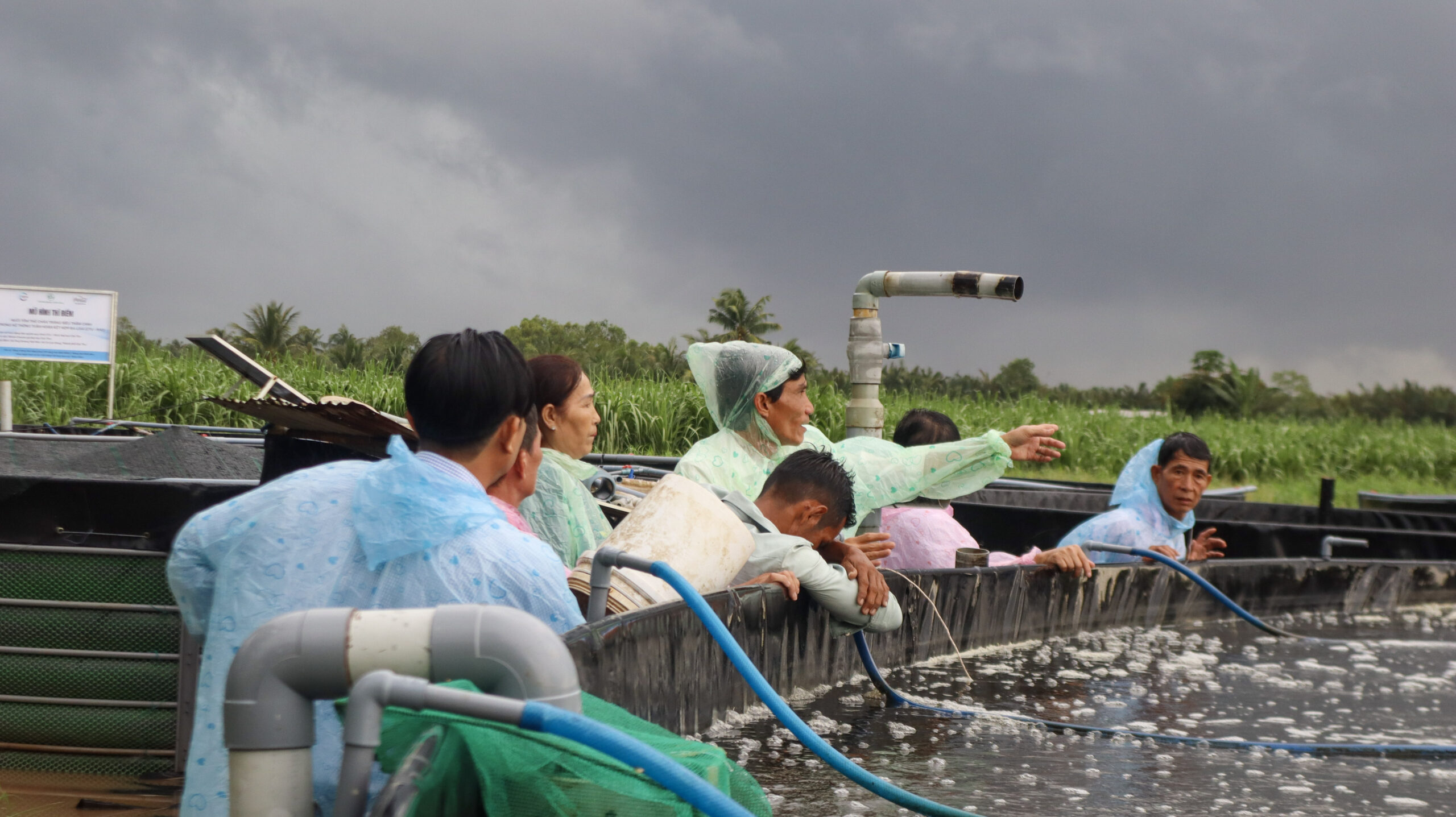
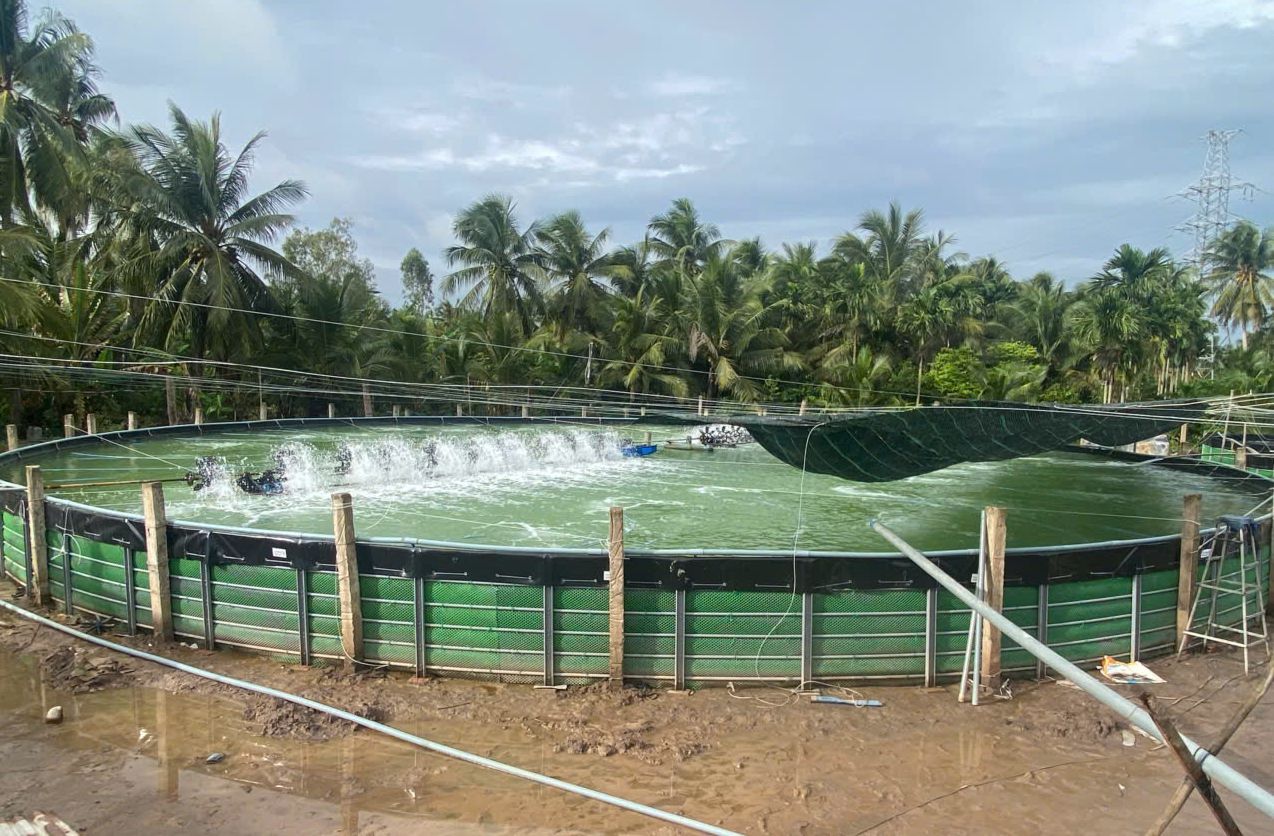
A pilot RAS-CTU model in Cu Lao Dung. Photo credit: IUCN Viet Nam
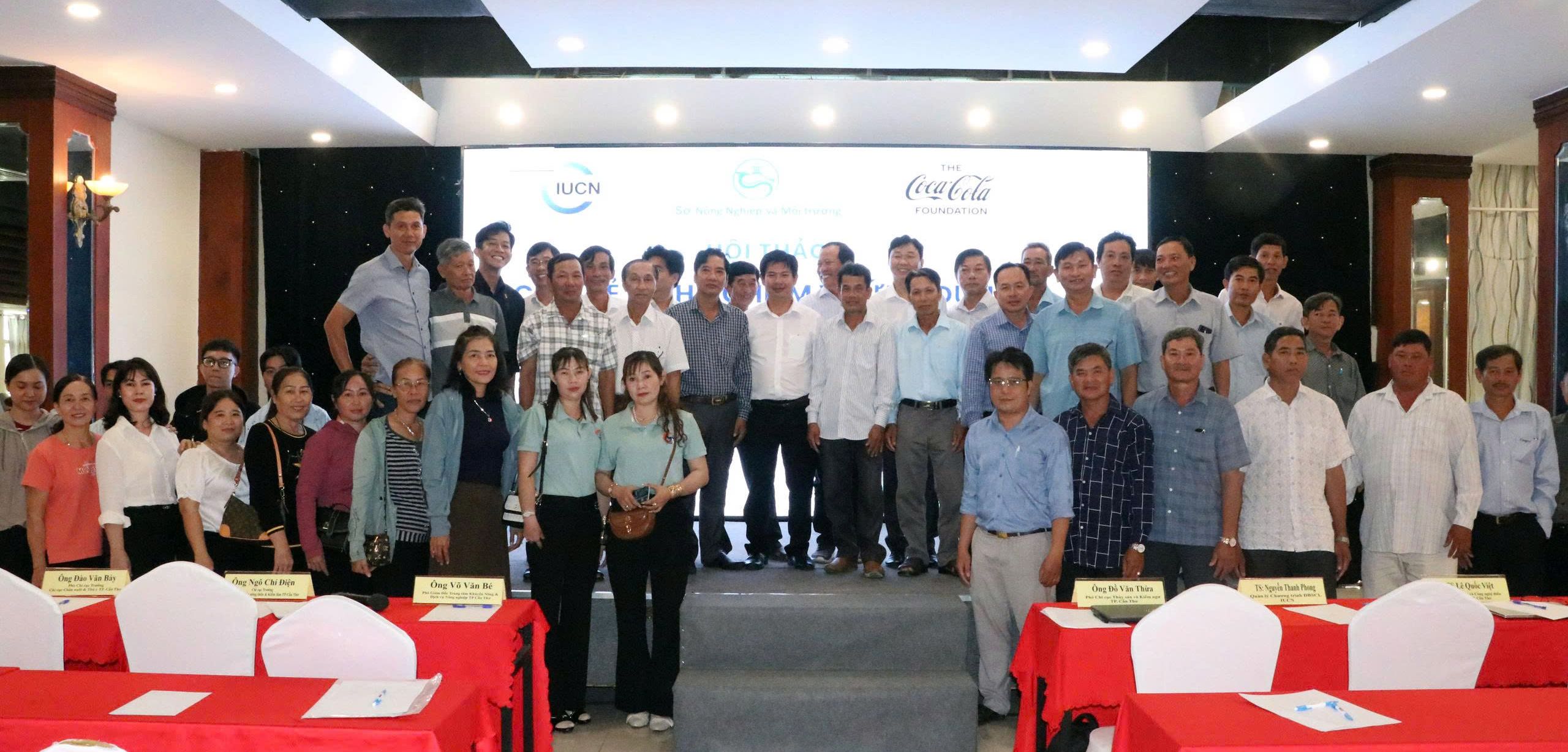
Workshop group in Can Tho City. Photo credit: IUCN Viet Nam
Farmers joined a field visit to Mr. Ben’s RAS-CTU farm. Photo credit: IUCN Viet Nam
For years, brackish water shrimp and crab farming has served as the Mekong Delta’s economic backbone, driving Can Tho’s seafood exports past 2.1 billion USD in 2025. Yet, local farmers face mounting pressures: severe climate swings from prolonged heatwaves to torrential rains, deteriorating surface water quality, and market volatility. To address these challenges, IUCN in collaboration with the Can Tho Department of Agriculture and Environment is implementing the project “Enhancing coastal resilience in the Mekong Delta through mangrove restoration and Nature-based Solutions” funded by The Coca-Cola Foundation.
On 10 September 2026, the workshop “Sharing experience on the application of Recirculating Aquaculture Systems (RAS)” was convened in Phu Loi Ward, Can Tho to review results of the model and exchange insights. The event brought together policymakers, researchers, agribusinesses, and local farmers from coastal areas including Vinh Chau, My Xuyen, and Cu Lao Dung. Following the morning session, participants joined a field visit to Mr. Truong Van Ben’s white-leg shrimp RAS-CTU (Can Tho University) farm in Cu Lao Dung to learn experience. This model was funded by IUCN and technically supported by Can Tho University.
Since 2018, CTU has developed the patented CTU-RAS multi-species recirculating system for super-intensive shrimp farming. The model has been practically proven and offers the following advantages:
– High and stable yields: Delivers comprehensive technical and economic efficiency (3.5-4.5 kg/m³ in rearing water; 3.3-4.3 kg/m³ system-wide).
– Eco-friendly and zero water exchange: Features 100% closed-loop recirculation with complete biological waste treatment and reuse.
– Space and water optimization: Maximizes rearing area (70-75% for farming vs. 20-25% for treatment) and produces 10-12 kg of shrimp per 1 m³ of water over three crops cycles.
– Maximum biosecurity: Minimizes disease risks through isolation from external environments and enhanced biofiltration.
– Cost effective and clean: Reduces commercial feed costs by supplementing with natural pumpkin. Yields safe, premium-quality shrimp using fewer chemicals and zero antibiotics.
– Climate resilient and adaptable: Highly scalable across various regions and production sizes, and seamlessly integrates with smart, high-tech management systems.
Mr. Do Van Thua, Vice-Head of Can Tho Sub-Department of Fisheries and Fisheries Surveillance emphasised at the workshop: “Aquaculture is confronting multi-faceted headwinds: degraded water sources, disease outbreaks, and tightening environmental standards. Transitioning to water-saving, low-emission, and sustainable production is an urgent priority. The RAS model demonstrates that closed-loop water treatment combined with mangrove conservation is key to mitigating risks, boosting yields, and protecting ecosystems.”
Rather than relying on full subsidies, the project takes a hybrid approach by providing technical support to redesign closed-loop systems, integrating culture ponds, microbial treatment ponds, settling basins, and mangrove buffers, while helping farmers repurpose existing infrastructure to minimize capital costs. The project pilot models have shown promising results:
38 out of 45 planned RAS models including two RAS-CTU models are operational in Ca Mau and Can Tho, reaching 85% project completion by September 2026.
15 households in Can Tho have transitioned to integrated models: shrimp-fish-mangrove, shrimp-mangrove, and crab-mangrove.
High survival rates of 57% to 98%, yielding 1-10 tons per household.
Clear financial gains: 6 out of 7 initial shrimp farmers earned profits between 1,000 USD and 26,000 USD per harvest cycle, while crab farmers maintained steady returns of 110-700 USD.
Mr. Nguyen Thanh Phong, Mekong Delta Programme Manager of IUCN Viet Nam, shared: “While no system can eliminate disease risks entirely, recirculating water significantly reduces these risks and helps farmers better withstand environmental shocks compared with conventional intensive shrimp farming systems. In integrated mangrove-aquaculture systems, mangrove roots and their microorganisms help retain suspended particles, transform and absorb nutrients, and break down organic matter, contributing to better water quality. By combining water recirculation with the natural water-treatment functions of mangroves, this approach can reduce water consumption, limit pollution discharge, and support more resilient and sustainable aquaculture.”
Moving forward, IUCN and local partners will focus on these priorities:
– Finalize the remaining seven pilot systems in Can Tho before December 2026, achieving the 45-model target across the project landscape.
– Restore and protect 18 hectares of inland dyke mangrove forests in Can Tho and Ca Mau.
– Encourage farmers to join cooperatives, overcome land constraint barriers and build reliable supply-chain links with enterprises.
– Advance biomass assessments to commercialize mangrove blue carbon credits, create supplementary income streams for local stewards.
Integrating RAS with mangrove restoration is far more than a technical upgrade; it reflects a mindset shift toward responsible stewardship. As clean water continues to circulate under Can Tho’s mangrove canopies, farmers are choosing to live in harmony with nature, safeguarding their water, their livelihoods and future.
Read more on iucn.org